In short: most funeral services follow a simple order: arrival music, entrance, welcome, readings, eulogy, reflection, tributes, final words and committal, then departure music. A celebrant led service usually takes 40 to 60 minutes. The printed order of service, often a folded card with a photo on the front, guides guests through it and becomes a keepsake.
When families sit down with us to plan a funeral, one of the first things we do together is sketch out the order of service. It sounds formal, but it is simply the running order of the farewell: who speaks, which music plays and when, and how the service ends.
Getting the order right helps the service flow gently, keeps it to time, and makes sure nothing important is forgotten. This guide explains each part of a typical funeral service, shows a sample order of service you can adapt, and covers the printed booklet many families hand out on the day.
What is an order of service?
The term has two meanings, and families use both:
- The running order of the funeral itself, which the celebrant, minister and funeral director follow on the day.
- The printed order of service, a card or booklet given to guests. It usually has a photo of the person on the front, their name and dates, and the list of what happens in the service, along with readings, hymn words or song titles.
Not every funeral has a printed booklet, but every funeral has a running order, even if it is very simple.
A typical funeral order of service
Here is the order we see most often at celebrant led services in our chapel in Ravenhall and at other venues across Melbourne. You can change, add or remove any part.
- Arrival music as guests are seated
- Entrance of the family, or of the coffin, with music
- Welcome from the celebrant or minister
- Opening words or prayer
- Reading or poem
- Eulogy, by one or more people
- Reflection with music, often with a photo tribute
- Further tributes, readings or a second eulogy
- Final words, prayer or blessing
- Committal, the formal farewell, with music
- Closing words and thanks, including details of the gathering afterwards
- Departure music as guests leave
Each part of the service, explained
Arrival music
Gentle music plays as people arrive and find their seats, usually for 15 to 20 minutes before the start time. It helps settle the room. Our guide to choosing funeral music has ideas.
The entrance
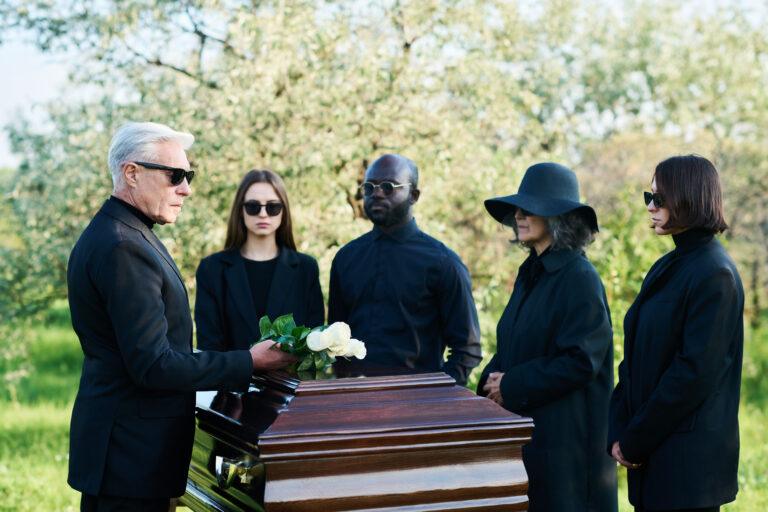
The service often begins with the family entering together, or with the coffin being carried or wheeled in, sometimes by family members acting as pallbearers. Some families prefer the coffin to be in place before guests arrive. Both are fine.
The welcome
The celebrant or minister welcomes everyone, acknowledges the family, and explains the purpose of the gathering. Many services also include an Acknowledgement of Country. The welcome sets the tone: formal, relaxed, religious or celebratory.
Readings and poems
Readings might be from a holy book, a classic poem, song lyrics or a passage that meant something to the person. One or two readings are usually plenty. Family members or friends often read, which is a lovely way to involve people who don’t want to give a eulogy.
The eulogy
The eulogy is the heart of most services: a speech about the person’s life and character, usually four to seven minutes long. Some families have one speaker, others share it among two or three people. If you are writing one, our guide on how to write a eulogy walks you through it.
Reflection and photo tribute
A few minutes of quiet reflection, usually with music, gives everyone space to remember. Many families pair this with a slideshow of photos. Our chapel has full audio-visual facilities for photos and video, and we can help bring a tribute together.
Further tributes
This might be a grandchild reading a short poem, a message from someone overseas, a few words from a friend or colleague, or a symbolic gesture such as lighting a candle or placing a flower on the coffin.
Final words and prayer
The celebrant or minister draws the service together with a final reflection, prayer or blessing.
The committal
The committal is the formal farewell. At a cremation service, it often happens as curtains close around the coffin or as the family places a hand on the coffin. At a burial, the committal usually takes place at the graveside, where the coffin is lowered. Many families choose their most meaningful song for this moment.
Closing words
The celebrant thanks everyone for coming, shares details of the gathering afterwards, and may mention donations to a chosen charity in place of flowers.
Departure music
As guests leave, a final song plays. Families often choose something a little lighter that reflects the person’s spirit.
Sample order of service you can adapt
Here is a simple example for a celebrant led service, lasting about 45 minutes:
| Part | Who | Approximate time |
|---|---|---|
| Arrival music | Playlist | Before the start |
| Entrance: “Time to Say Goodbye” | Family enters | 4 minutes |
| Welcome and Acknowledgement of Country | Celebrant | 3 minutes |
| Reading | Granddaughter | 3 minutes |
| Eulogy | Son and daughter | 10 minutes |
| Reflection and photo tribute | Two songs | 8 minutes |
| Tribute from a lifelong friend | Friend | 4 minutes |
| Final words | Celebrant | 3 minutes |
| Committal: “What a Wonderful World” | Celebrant and family | 4 minutes |
| Closing words and invitation to refreshments | Celebrant | 2 minutes |
| Departure music | Playlist | As guests leave |
Different kinds of services
A religious funeral
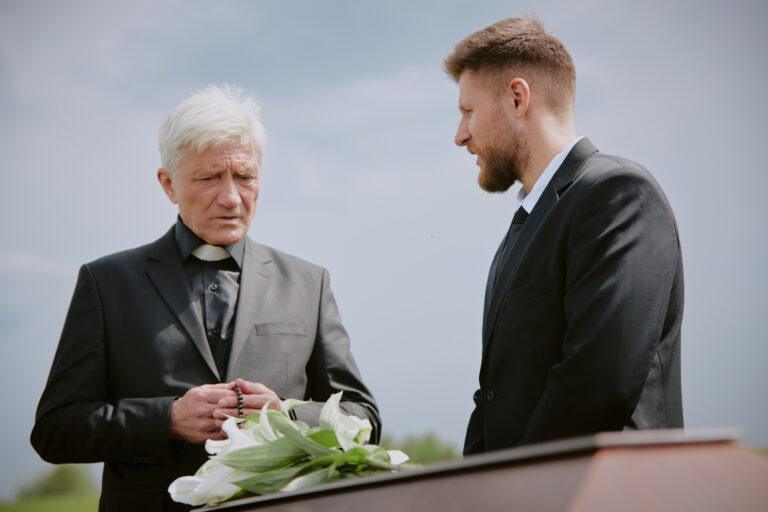
Religious services follow the traditions of the faith, and the minister, priest or faith leader will guide the order. A Catholic funeral, for example, may include a Mass, while other Christian services might include hymns, prayers and Bible readings. If the service is in a church, the minister will usually meet with the family to plan it.
A celebrant led funeral
Civil celebrants lead services that may include some religious content or none at all. These services are very flexible and can be shaped entirely around the person and the family. Our price list shows civil celebrant fees from $750.
A graveside service
A graveside service is held entirely at the cemetery and is usually shorter, around 20 to 30 minutes, with a welcome, a eulogy, a reading or prayer and the committal. Our burial services include graveside options.
A memorial service or celebration of life
Held after a private cremation or burial, a memorial service can follow any order you like. It is often more relaxed, with more time for stories and music. Our article on personalising a cremation farewell has ideas.
How long should a funeral service be?
Most chapel and church services run for 40 minutes to an hour. Venues and crematoriums book in set time slots, so it is important to plan within the time available. A long service can feel tiring for elderly guests and young children, while a very short one may leave people feeling rushed. Our article on how much time to allow for a funeral chapel service explains how to plan the timing.
Creating the printed order of service
A printed order of service gives guests something to follow, and it often becomes a treasured keepsake. A simple folded card usually includes:
- Front cover: a favourite photo, the person’s full name, the dates of birth and death, and perhaps the words “In loving memory” or “A celebration of the life of”
- Inside: the running order, with the names of speakers, the titles of readings and songs, and the words to any hymns sung by everyone
- Back cover: a poem, a favourite saying, a thank you from the family, details of the gathering afterwards and the charity for donations
Tips for the printed booklet:
- Choose a clear photo that looks like them at their happiest
- Check names and dates very carefully, ideally with two people
- Keep the design simple and the text large enough to read easily
- Print a few more copies than you expect guests, as people like to take one for family who couldn’t come
Many families also post the order of service and photos on an online tribute page, such as Tribute Memorials, so friends near and far can see it.
Involving family and friends
Giving people a role can be healing. Ideas include:
- Pallbearers to carry the coffin
- Readers for poems or passages
- Grandchildren placing flowers or drawings on the coffin
- A friend or family member playing live music
- Someone to greet guests and hand out the order of service
- A family member to light a candle during the reflection
Not everyone will want a role, and that is fine. Just being there is enough.
Including people who can’t be there
If family or friends can’t travel, a live stream lets them watch the service in real time. Some families also ask overseas relatives to record a short message or reading, which can be played during the tributes.
A planning checklist for the order of service
When families come to us, we often work through a short checklist together. You might find it helpful to jot down your answers before you meet with your funeral director or celebrant. It doesn’t need to be perfect, and every answer can change later.
- Where will the service be held? Our chapel, a church, the graveside, or another venue that meant something to the person.
- Who will lead it? A civil celebrant, a minister or faith leader, or a family member with help from the funeral director.
- How long do we have? Check the booking time at the venue and crematorium or cemetery, then plan the parts to fit comfortably.
- Who would like to speak? List the eulogy speakers and anyone reading a poem or passage, and ask each person roughly how long they will take.
- Which songs and when? Most services have four to six pieces of music: arrival, entrance, reflection, committal and departure.
- Will there be a photo tribute? If so, decide who will gather the photos and how many to include. Around 40 to 60 photos fit a two song slideshow.
- Any cultural or faith customs? Let us know early so we can make sure the timing, the setting and any rituals are respected.
- Will people watch online? If so, arrange the live stream and share the link with family before the day.
- What happens afterwards? Refreshments, a wake at home or a venue, or a private family gathering. The celebrant can announce the details at the end.
Common mistakes to avoid
After many years of helping Melbourne families, a few things come up again and again. None of them are disasters, but they are easy to avoid with a little planning.
- Too many speakers. Five or six speeches can stretch a service well past its booked time. If lots of people want to contribute, consider one main eulogy and a few short written messages read by the celebrant.
- Eulogies that run long. Ask speakers to practise out loud with a timer. A page of typed text at a comfortable pace is about two to three minutes.
- Music files that don’t play. Send music and photos to us a couple of days ahead so they can be tested on the chapel system, rather than bringing them on a phone on the morning.
- Typos in the printed booklet. Names, dates and spellings matter enormously to families. Have two people proofread before printing.
- Forgetting to thank people. A short thank you, read by the celebrant, to carers, nurses, neighbours or friends who helped can mean a great deal to those listening.
If something does go slightly off plan on the day, try not to worry. Guests are there out of love, and small hiccups are rarely remembered. What people remember is the feeling of the farewell and the stories they heard.
Frequently asked questions
Who decides the order of service?
The family, guided by the celebrant, minister and funeral director. There is a lot of flexibility, especially for celebrant led services.
Do we have to have a printed order of service?
No. It is a lovely keepsake but entirely optional. Some families display the order on a screen instead.
How many speakers should there be?
Two or three speakers is common. More than that can make the service long, so consider shorter tributes or written messages read by the celebrant.
Can we change the order on the day?
Small changes are usually fine. Let the celebrant and funeral director know as early as you can so everyone is on the same page.
Let us help you plan it
Planning the order of service is one of the ways we help families shape a farewell that truly feels like the person they love. Call us any hour on (03) 9449 5236, read our step-by-step funeral guide, or see our chapel and venues.