In short: you don’t need the perfect words to support a grieving friend. Say their person’s name, offer specific practical help rather than “let me know if you need anything”, listen more than you talk, and keep showing up in the weeks and months after the funeral, when most support fades away. Small, steady gestures matter far more than grand ones.
When someone you care about loses a person they love, it is natural to feel helpless. You want to make it better, and you can’t. You worry about saying the wrong thing, so sometimes you say nothing at all.
Working alongside grieving families every day, our team sees what genuinely helps people through those first days and weeks, and what quietly hurts. This guide shares practical, honest ideas for supporting a friend, neighbour, colleague or family member after a death.
First, understand that grief isn’t a problem to fix
Grief is the natural response to losing someone we love. It doesn’t follow neat stages or a timetable. Your friend may be numb one day, angry the next, laughing at a memory, then overwhelmed by something as small as a song in the supermarket. All of that is normal.
Your role isn’t to fix the grief or hurry it along. It is to keep your friend company in it. That takes some of the pressure off you. You don’t need to find the answer, because there isn’t one. You just need to be there.
What to say to someone who is grieving
Simple, sincere words are best. A few ideas:
- “I’m so sorry. I’ve been thinking about you.”
- “I don’t know what to say, but I’m here.”
- “I loved how [name] always…” followed by a real memory
- “You don’t have to reply to this. I just wanted you to know I care.”
- “I’m dropping dinner over on Thursday. Is that okay?”
Say their name
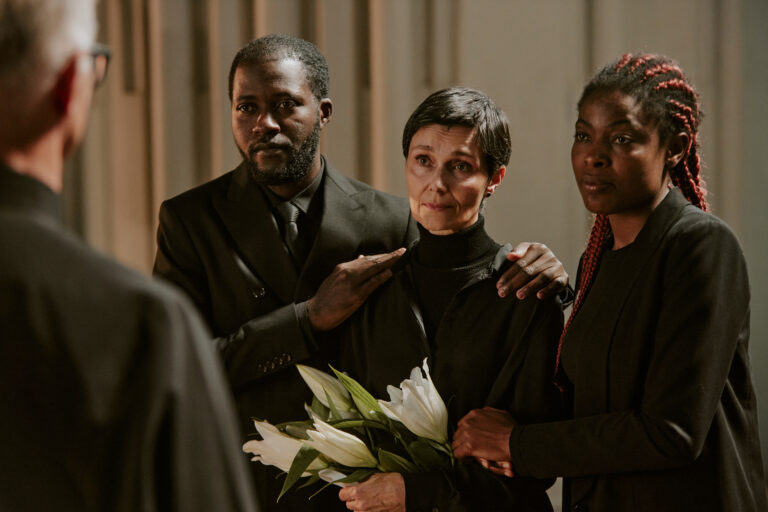
Many grieving people say the hardest part is that everyone stops mentioning the person who died. Saying their name, and sharing a story about them, tells your friend that their person mattered and is still remembered. If they cry, that isn’t a sign you’ve upset them. It often means you’ve given them permission to grieve.
What not to say
Most hurtful comments come from kind intentions. Try to avoid:
- “Everything happens for a reason.” It can feel like the death is being justified.
- “At least they had a long life” or “At least you have other children.” Anything starting with “at least” tends to shrink the loss.
- “I know exactly how you feel.” Even if you have been through something similar, every loss is different. “I lost my dad too, and I remember how hard it was” is gentler.
- “They’re in a better place,” unless you know your friend shares that belief and would find it comforting.
- “You need to be strong.” Grieving people need permission to fall apart, not pressure to hold it together.
- “Call me if you need anything.” It is kindly meant, but it puts the work back on your friend, who probably won’t call.
If you do say something clumsy, don’t panic. A simple “I’m sorry, that came out wrong. I just care about you” goes a long way.
Practical help that makes a real difference
In the days after a death, a family’s world turns upside down. There are phone calls, visitors, decisions about the funeral and paperwork, while ordinary life keeps going. Practical help lifts a real weight. The key is to offer something specific.
In the first few days
- Drop off a meal in a container that doesn’t need to be returned
- Do a grocery run, including the basics like milk, bread and toilet paper
- Pick up kids from school or sport, or take them to the park for a few hours
- Walk the dog, feed pets or water the garden
- Answer the door or the phone, or keep a list of who has called
- Collect visiting relatives from the airport
- Mow the lawn or put the bins out
Helping with the funeral
Planning a funeral involves lots of small jobs that friends can help with, if the family wants it. You might:
- Gather photos for a slideshow or photo board
- Help proofread the order of service
- Pass on funeral details to a wider group of friends or colleagues
- Organise food for the gathering after the service
- Offer to drive family members on the day
Always ask first, and follow the family’s lead. Some families want lots of help, others prefer to keep the planning close. Our guides to the funeral order of service and writing a eulogy may be useful if you are helping in those areas.
Organising help from a group
If lots of people want to help, one friend can coordinate. A shared meal roster stops the family receiving six lasagnes on Monday and nothing for the rest of the week. A group chat or a shared spreadsheet works well for this.
Going to the funeral
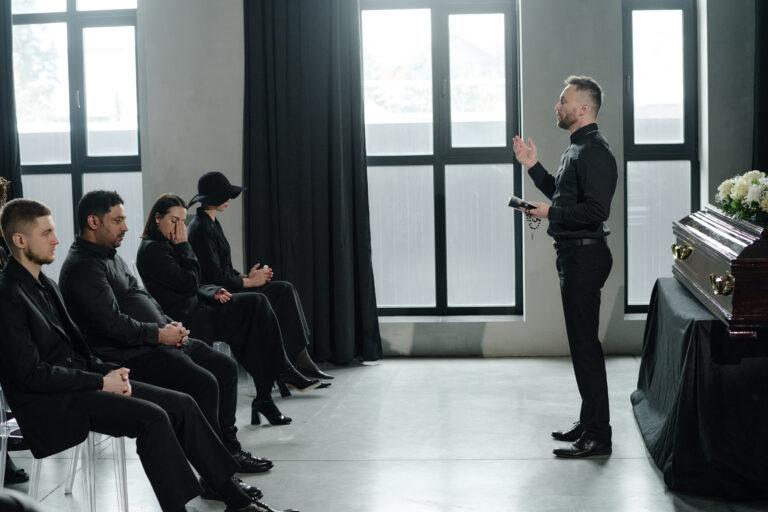
If you are unsure whether to attend, it is almost always appreciated. Families often say they were deeply touched by how many people came. You don’t need to have known the person well, and being there for your friend is reason enough. If you can’t attend in person, ask whether the service is being live streamed, or send a card.
Not sure what to wear, whether to bring flowers or what to write in a card? Our guide to funeral etiquette in Australia covers all of that.
The weeks and months after the funeral
This is where good friends make the biggest difference. In the first week or two, there are visitors, flowers and casseroles. After the funeral, the house goes quiet. Everyone else goes back to normal life, and the grieving person is left with the reality of the loss.
Ways to keep showing up:
- Put reminders in your calendar to check in at one month, three months and six months
- Invite them for a walk, a coffee or a quiet movie night
- Keep inviting them to things, even if they say no for a while
- Offer help with jobs the person who died used to do, such as car servicing, finances or garden work
- Send a message on difficult days: birthdays, anniversaries, Mother’s Day, Father’s Day and the first Christmas
A simple text on the anniversary of the death, saying “Thinking of you and [name] today”, can mean more than you would ever know.
Listening well
Often the most helpful thing you can do is listen. A few tips:
- Let them talk about the person, the death, or anything at all, without steering the conversation
- Be comfortable with silence and tears
- Resist the urge to give advice unless they ask for it
- Don’t compare their loss to your own or to anyone else’s
- Let them repeat the same story. Retelling is part of how people make sense of a loss
Supporting different kinds of loss
When the death was sudden
An unexpected death, such as an accident or a sudden illness, can leave people in shock for a long time. There may also be a coroner’s investigation, which can delay the funeral and add stress. Be patient, and help with practical things while your friend is overwhelmed.
When someone has been caring for a long time
After a long illness, your friend may feel exhausted, relieved and guilty about feeling relieved, all at once. Reassure them that this mix of feelings is common and understandable. They may also have lost their daily routine and purpose along with the person they loved.
When a child or young person has died
The death of a child is one of the hardest losses there is. Avoid trying to find meaning in it, keep saying the child’s name, and remember the parents for years to come, including on the child’s birthday.
Supporting a colleague
At work, a card signed by the team, flexibility with leave and a quiet word when they return can help. Ask how much they want to talk about it at work, as some people want normality while others appreciate acknowledgement.
When grief needs more support
Grief is not an illness, but sometimes it becomes very heavy and doesn’t ease over time. You might gently encourage your friend to speak to their GP or a grief counsellor if they:
- Can’t manage daily tasks months after the death
- Are withdrawing from everyone and everything
- Are relying on alcohol or other substances to cope
- Talk about not wanting to go on
In Australia, support is available through GriefLine, the Australian Centre for Grief and Bereavement, Beyond Blue (1300 22 4636) and Lifeline (13 11 14, available 24 hours). If you are ever worried someone is in immediate danger, call 000.
Look after yourself too
Supporting someone through grief can be draining, especially if you are grieving the same person. It is okay to set limits, share the load with other friends, and take time to rest. You will be a better support if you look after yourself as well.
Respecting faith and cultural traditions
Melbourne families come from every corner of the world, and grief is expressed in many different ways. Some cultures gather for days of prayer and visiting, others hold a quiet private funeral. Some families wear white rather than black, some observe a mourning period with particular customs, and some ask that no flowers be sent. If you are unsure, it is perfectly fine to ask a family member or a mutual friend what would be appropriate. People generally appreciate the care behind the question far more than they would mind it being asked.
If the family has a religious or community leader, they may also be able to guide you on how best to show respect, whether that means visiting the home, bringing food, joining prayers or simply sending a message.
Helping with the practical side of life after a death
Long after the funeral, there are jobs that need doing: closing accounts, notifying banks and utilities, sorting through belongings, dealing with the car or the house. These tasks can feel unbearable to someone who is grieving. Offering an afternoon to help sort paperwork, make phone calls or pack up a wardrobe can be a real gift. Let your friend set the pace. Some people want to tackle it straight away, while others need months before they are ready to touch their loved one’s things.
Above all, remember that there is no perfect way to support someone. The friends people remember years later are rarely the ones who said the wisest things. They are the ones who kept turning up, kept saying the name, and kept caring.
A note for workplaces and community groups
Sports clubs, schools, churches and workplaces can be a huge source of comfort. A team that organises meals, a club that holds a minute’s silence, or a manager who quietly adjusts deadlines all send the same message: you are not alone, and the person you lost mattered here too.
Frequently asked questions
Should I contact my friend straight away?
Yes, a short message is usually welcome, even if they don’t reply. Let them know there is no need to respond.
Is it okay to talk about the person who died?
Almost always, yes. Most grieving people want their loved one remembered and spoken about.
What can I send instead of flowers?
A meal, a grocery delivery, a voucher for takeaway, a donation to a charity the person cared about, or a handwritten card with a favourite memory.
How long does grief last?
There is no set time. Grief usually softens, but it doesn’t disappear on a schedule. Anniversaries and milestones can bring it back strongly, even years later.
Can I leave a message online?
Many families create an online tribute page, such as on Tribute Memorials, where friends can share memories and condolences.
We are here for families, and for their friends
If you are helping a friend through the early days after a death, you are welcome to call us with any questions, any hour, on (03) 9449 5236. You may also find our step-by-step funeral guide and our funeral services helpful to share with them.