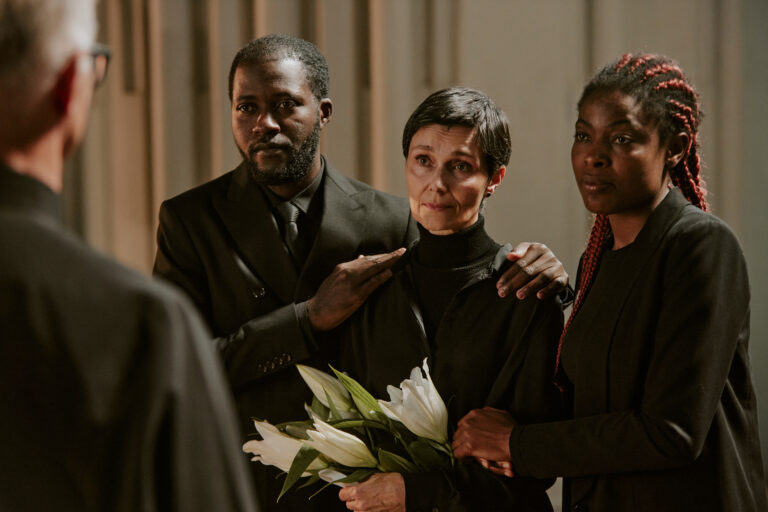
In short: arrive 15 minutes early, dress neatly in darker or muted colours unless the family asks otherwise, switch your phone off, and keep what you say to the family simple and sincere. Follow the family’s lead on flowers, donations and the gathering afterwards. Showing up matters far more than getting every detail right.
Most of us only go to a handful of funerals in our lives, so it is completely normal to feel unsure about what to wear, what to say or what is expected. People often ask us these questions quietly at the door of our chapel, worried about getting something wrong.
Here is the reassuring truth: families rarely remember who wore what or who said the perfect thing. They remember who came. This guide covers the practical etiquette of Australian funerals today, based on what we see at services across Melbourne every week, so you can focus on supporting the people who are grieving.
Before the funeral
How will I find out about the service?
Families usually share service details through a phone call, a message, a social media post, a funeral notice in the newspaper or an online tribute page. Many families now use an online memorial, such as Tribute Memorials, to post the date, time, venue and live stream link in one place, and to let people leave a message.
If you are not sure whether the service is open to everyone, check the notice. Some families choose a private funeral for close family only, sometimes followed by a public memorial later. If the notice says “private”, it is respectful to send a card or flowers instead of attending.
Should I contact the family before the funeral?
A short message is usually welcome. Something like “I’m so sorry about your dad. Thinking of you all” is plenty. Avoid asking for details about how the person died, and don’t expect a reply. Grieving families receive a lot of messages in the first few days.
If you are close to the family, practical help is often more valuable than words. Dropping off a meal, mowing the lawn, picking up relatives from the airport or minding children on the day of the funeral can make a real difference.
What to wear to a funeral in Australia
Traditional funeral dress is neat and understated. Darker colours such as black, navy, charcoal and grey are always a safe choice. That said, Australian funerals have become more relaxed, and many families now ask guests to wear something specific.
- If the notice says “wear something bright”: do it. Families who ask for colour usually want to celebrate the person’s personality.
- If it mentions a footy club or team colours: wearing a scarf or jersey is a lovely gesture.
- If there are no instructions: smart casual or business wear in muted colours is appropriate.
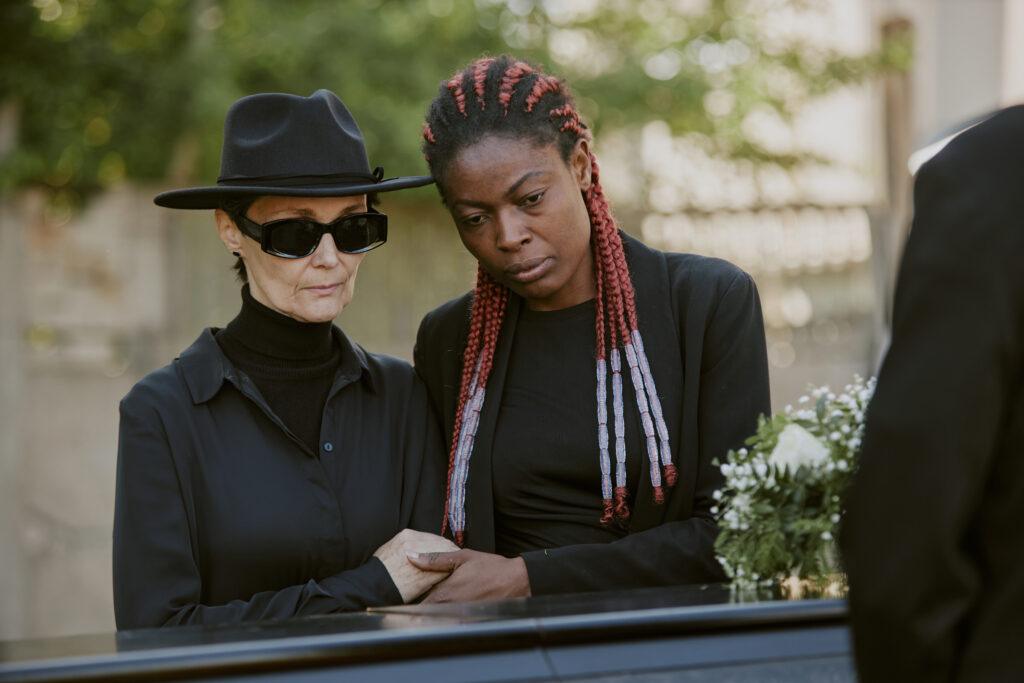
- For a graveside service: think about the weather and the ground. Comfortable, closed shoes, a jacket and an umbrella or hat are sensible, as cemeteries can be exposed.
- For a religious service: some faiths have specific customs, such as covering your head or shoulders. If you are unsure, it is fine to ask a family member or the funeral director.
Avoid anything that draws attention, such as slogans, very casual beachwear or loud accessories, unless the family has asked for it.
Arriving at the service
Aim to arrive about 15 minutes before the start time. This gives you time to park, sign the condolence book if there is one, and find a seat without rushing. Funeral services run to tight timings, especially at crematoriums and cemetery chapels, so they rarely start late.
If you do arrive late, slip in quietly and sit near the back. Wait for a pause, such as during music, before taking your seat.
Where should I sit?
The front rows are usually kept for immediate family. Close friends often sit just behind them, and everyone else fills in from there. If you are unsure, a funeral staff member or usher will be happy to guide you.
What about my phone?
Switch it off or to silent before you go in. Don’t take photos or video during the service unless the family has specifically asked for it. Many families arrange a live stream or a professional recording if they want the service captured.
During the service
A funeral usually follows an order of service that might include a welcome, music, readings, a eulogy, a reflection or prayers, and a final farewell or committal. If you would like to understand how a service flows, our guide to the funeral order of service walks through each part.
Simple etiquette during the service:
- Follow the lead of the celebrant or minister when it comes to standing, sitting or joining in prayers and songs
- If you don’t share the faith of the service, it is fine to sit or stand quietly with everyone else without joining in
- Laughter is welcome when someone shares a funny story. It is part of remembering
- It is fine to cry. Tissues are usually available, and nobody will think twice
- If you have a baby or young child who becomes unsettled, step outside for a moment
Viewing the person who has died
Some families arrange an open casket or a viewing before or after the service. You are never obliged to view. If you would like to, take your time, and feel free to say a few words or touch their hand if it feels right. Many people find it helps them say goodbye.
What to say to the family
This is the part people worry about most. You don’t need eloquent words. Short, honest and kind is best.
Things that help
- “I’m so sorry for your loss.”
- “She was a wonderful person. I’ll always remember how she …”
- “I don’t know what to say, but I’m here for you.”
- “He talked about you all the time. He was so proud of you.”
- Simply a hug, a handshake or a hand on the shoulder
Things to avoid
- “I know how you feel.” Even if you have lost someone too, everyone’s grief is different
- “They’re in a better place.” This can comfort some families and hurt others, so leave it to them to say
- “At least they had a long life.” It can sound like you are minimising the loss
- Questions about the cause of death, money or the will
- Long stories about your own experiences of loss
If you knew the person and the family didn’t know you, a quick introduction helps: “I’m Lisa. I worked with your mum at the library for ten years.” Families love hearing how far their loved one’s kindness reached.
Flowers, cards and donations
Should I send flowers?
Flowers are a traditional way of showing sympathy. You can send them to the funeral home before the service or to the family’s home afterwards. Check the funeral notice first, as some families ask for donations to a charity instead of flowers. If the notice says “in lieu of flowers”, please respect that request.
What should I write in a sympathy card?
Keep it short. A line of sympathy, a brief memory of the person if you have one, and your name is all that is needed. For example: “Thinking of you all. I’ll never forget your dad’s laugh at the club barbecues. With love, Mark.” Handwritten notes are often kept and read again in the months ahead.
What about donations?
If the family has named a charity, you can usually donate online or using envelopes provided at the service. A donation in the person’s name to a cause they cared about is a meaningful way to honour them.
After the service
The committal and the gathering
If the funeral is followed by a burial, close family and friends often travel to the cemetery for the committal. The notice will usually say whether everyone is welcome. If you are unsure, it is fine to ask.
Many families invite guests to share refreshments after the service, sometimes called the wake. This is a relaxed chance to share memories and support the family. Stay for a little while if you can. You don’t need to stay for the whole gathering, and it is fine to leave quietly after saying goodbye to the family. Our article on small gestures that support guests after a funeral has more ideas for families hosting a gathering, and we can help arrange after funeral catering.
Keep checking in
The weeks after a funeral are often the hardest. Phone calls and visits drop away just as the reality of the loss sinks in. A message a month later, remembering their birthday or anniversary, or an invitation for a coffee can mean a great deal. Our guide on how to support a grieving friend has practical ideas.
Funeral etiquette for children
Whether to bring children to a funeral is a personal decision. Many children cope well when they are prepared for what they will see and hear, and being included can help them grieve. Explain simply what will happen, sit near the end of a row in case you need to step out, and bring something quiet to keep little ones occupied. Our article on helping children understand death and funerals covers this in more depth.
Cultural and religious customs
Melbourne is home to many cultures and faiths, and funeral customs vary widely. Some services include prayers in another language, specific rituals at the graveside, particular dress codes, or customs about food and visiting the family’s home afterwards. If you are attending a service from a tradition you are not familiar with, it is respectful to:
- Ask a family member or friend what to expect and what to wear
- Follow what others are doing during prayers or rituals
- Avoid physical contact if you are unsure it is customary
- Check whether flowers are appropriate, as they are not part of every tradition
Funeral directors are used to these questions. If you are unsure, quietly asking a staff member at the service is perfectly fine.
Online and live streamed funerals
If you are watching a service online, the same courtesy applies as if you were there. Join a few minutes early, keep your camera off unless asked, and give the service your full attention. Afterwards, a message to the family to say you watched and were thinking of them is a kind touch, especially if you couldn’t travel.
Etiquette for colleagues and workplaces
When a colleague dies, or a workmate loses someone close, workplaces often want to do something but aren’t sure what is appropriate. A few simple guidelines help.
- Check before attending as a group. A large group from work is usually welcome at a public service, but it is kind to check with the family or your colleague first.
- Send one card from the team. A single card signed by everyone, or a joint donation to the family’s chosen charity, is often easier for the family than many separate gestures.
- Give your colleague space and flexibility. Grief doesn’t end with the funeral. Flexible hours, a lighter workload and a quiet “how are you going?” in the weeks afterwards are often appreciated.
- Share memories, if appropriate. If the person who died was a colleague, the family may love to hear stories about their working life. A short note with a memory can be treasured.
Frequently asked questions
Can I wear black jeans to a funeral?
Neat dark jeans with a smart top or jacket are generally acceptable at more relaxed services. For a church service or a more formal funeral, trousers or a skirt are a safer choice.
Is it okay to attend if I didn’t know the person well?
Yes, unless the service is marked private. Coming to support a friend or colleague who is grieving is a kind thing to do.
How long does a funeral service usually last?
Most services in a chapel or church run for about 40 minutes to an hour, plus time to gather before and after. A graveside service is often shorter.
Should I bring a gift?
Gifts aren’t expected at Australian funerals. Flowers, a card, a donation or a meal for the family afterwards are the usual gestures.
A final word
Funeral etiquette exists to help people feel comfortable and to keep the focus on the person being remembered and the family who loved them. If you arrive on time, dress respectfully, speak kindly and follow the family’s lead, you will be doing exactly the right thing.
If you are planning a funeral and have questions about what to include, what guests will need to know or how to share the details, our team in Ravenhall is here to help any hour of the day or night. Call us on (03) 9449 5236 or read our step-by-step funeral guide.